Each Assembly is hosted by a network of local fashioning coalitions from around the world. Each hosting community decides on its own programme, content(s), format(s), language(s), aesthetics and participants according to its specific experiences and needs.
GFA22 Hosting Coalitions
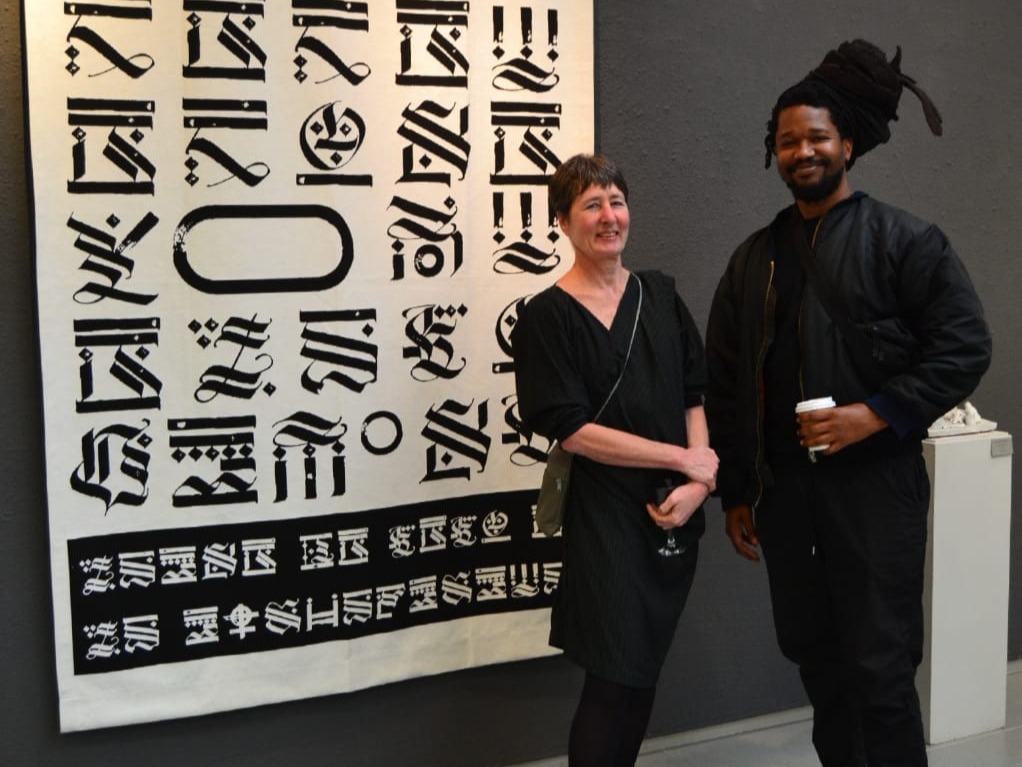
The African Fashion Research Institute (AFRI) is a community of critical Southern African fashion thinkers co-founded in 2019 by Erica de Greef, who is a researcher, educator and curator based in South-Africa and Lesiba Mabitsela, who is a interdisciplinary artist and fashion practitioner. This community of artists, designers, academics, filmmakers, writers and activists aims to challenge, confront, explore and expand on definitions and archives of fashion. All its members work with fashion in ways that interrupt coloniality in terms of fashioning memory, making, wearing and meanings in the Global South. This includes decolonial activist Shayna Goncalves, wikimedia director Khanyi Mpumlwana, filmmakers and producers Siviwe James and Marcus Mabuselo, critical thinkers Bongani Tau and Russel Hlongwane, and cultural strategist heeten bhagat.
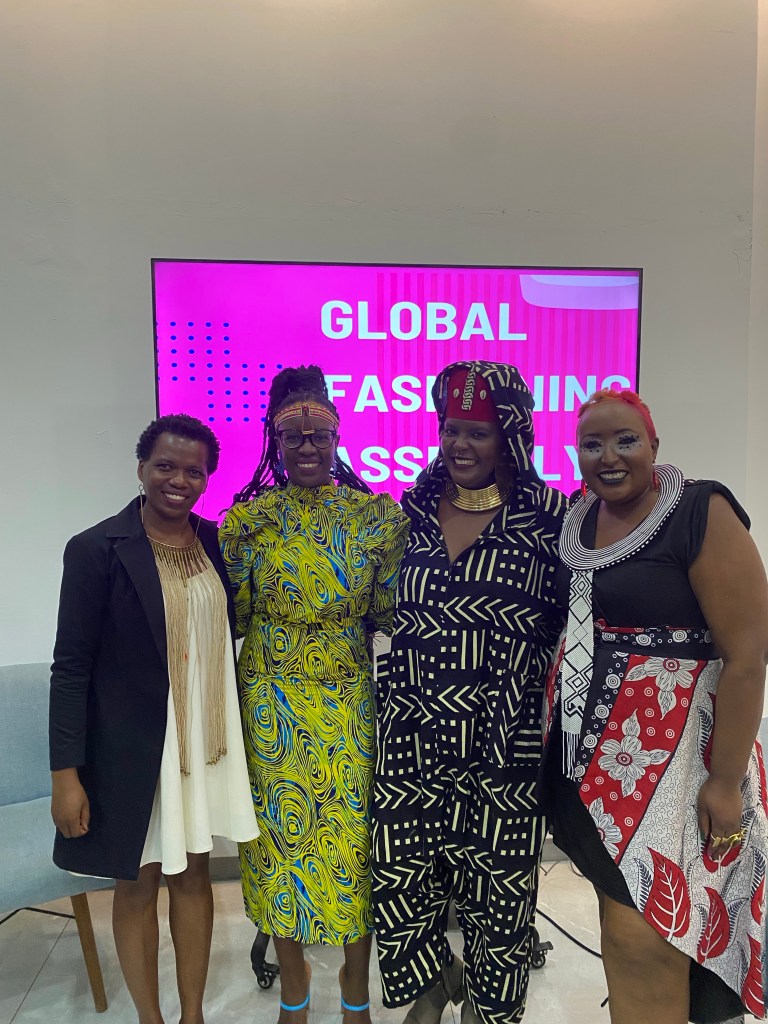
Own Your Culture (OYC) is an online platform created by Chepkemboi Mang’ira, who is a journalist and researcher based in Kenya. This online platform aims to promote, preserve and educate youth in Kenya and beyond on traditional jewellery and its relevance in the fashion of today. This virtual community is aimed at reimagining what fashion is when traditional jewellery is included and true to its own local context. This has been resulting in a new appreciation of traditional jewellery, with more designers drawing on their heritage to design and an online community that advocates for fashion inclusivity. There is an urgent need for self-representation and the influential power of digital media enables others to see themselves accurately represented. “We wanted to reclaim our heritage and digital media have given us the space to be.”
The Fashion Liberation Collective North Africa (FLCNA) was founded by Nada Koreish, who is a designer, researcher and educator based in the UK. The Collective aims to represent North Africa by applying a decolonial approach to local fashion systems and histories and to bring to light ‘true’ North African representations in art and design. By owning and rewriting the gaps in history, addressing issues of coloniality and creating a space for North African creativity, it provides a wealth of material for design and creative students of the region. The Collective creates spaces for support and collaboration which will eventually play a role in the education of future North African creatives.
Watch the Morocco GFA22 hosting session

The North Carolina Museum of Art (NCMA) believes in the transformative power of art. Through the People’s Collection, the state art collection that belongs to the citizens of North Carolina, and their 164-acre Park, the museum strives to create a sense of welcome and belonging. One of its curators, Amanda Maples, is a researcher, writer and curator of African art. She has written essays, books and articles and curated a range of exhibitions on historical and contemporary African arts, museum policies, and ethical collecting practices. Including Good as Gold: Fashioning Senegalese Women, the first in-depth scholarly exploration of Senegalese gold jewellery to date. She is also Secretary of the Steering Committee for the Benin Dialogue Group, which is a multi-lateral international collaborative working group that brings together delegates from Western museums with representatives of the Nigerian Government, the Royal Court of Benin, and the Nigerian National Commission for Museums and Monuments to stimulate the restitution of illegally acquired artworks, in particular the Benin Bronzes.

The New Zealand Fashion Museum (NZFM) is a virtual fashion museum initiated in 2010 by Doris de Pont. With no fixed physical location, it is a museum dedicated to the documentation and sharing of New Zealand’s rich fashion past, making it relevant for the present and future. Established as a charitable trust, the museum holds “pop-up” exhibitions around New Zealand, produces relevant publications and runs as an online museum making New Zealand’s unique fashion identity visible and accessible to a broad audience. While it embraces the traditional purpose of a museum; to develop social knowledge and encourage discussion about society, culture and national identity, it breaks with the traditional museum form with its ability to be flexible, dynamic and a museum trendsetter. It chooses not to be represented by a grand building or a physical collection but instead by the quality of its research, publications, website and its award-winning exhibitions. One key pillar in seeking to create a comprehensive record of New Zealand’s fashion story is collaboration. By drawing on objects and knowledge held by individuals in the community at large and by working with many different institutions like art galleries, libraries, universities, and museums in sharing digital archives, realising projects and providing specialist curatorial services the NZFM is a multi-vocal platform.

The Pakistan Collective of Decolonial Practice, initiated by Sonya Battla in 2022 following the GFA22, is organised around transdisciplinary approaches to undoing the deep epistemic violence of Pakistan colonial history, convene to discuss, to write, to produce exhibitions and publications that center the work of Pakistani designers, artists, architects, scholars, researchers and poets.

Aika Jaxybai is a fashion creative, film maker and artist based in Kazakhstan as well as the founder of the fashion brand Aika Alemi. Aika’s work is rooted in a deep respect for authentic Kazakh culture and tradition, combining the heritage of local artisan craftsmanship with nomadic designs. Inspired by a beautiful Kazakh patchwork quilt made by her great grandmother, she knew she wanted to give new life to this cultural heritage by re-inventing and adapting it. Her vision for her collections emerges from new interpretations of these ancient techniques and applications.

The Centre for Research of Fashion and Clothing (CIMO) is a nonprofit organization created in 2013 and based in Zagreb, Croatia. CIMO was founded with the aim of researching the theoretical – scientific and creative aspects of fashion and clothing as part of contemporary visual culture. They aim to contextualize specific local practices and phenomena in relation to the global fashion system and academic fashion discourse. Some of the topics they cover are the rise and fall of the local textile industry, working class clothing practices, post socialist fashion histories, reinvention of different local craft traditions, socially engaged collaborative textile practice, etcetera. All their projects have a particular focus on the relation between politics and aesthetics, specifically politics of representation, and practices of self-colonization (Alexander Kiossev). This concept is enacted under political and cultural circumstances when the Other self evidently recognizes foreign cultural supremacy and voluntarily absorbs the basic values and categories of colonial Europe. This is especially visible in the field of fashion system as there is a strong polarization between the dominant fashion centre and other fashion peripheries.

Awamaki is a nonprofit social enterprise dedicated to connecting Andean artisan weavers with global markets. They collaborate with women artisans to support their efforts towards educational and financial independence. They are a community-driven social enterprise working in deep collaboration with Quechua artisans. Together they create grassroots programs to support and grow women-led cooperatives through heritage textiles, market access, and sustainable tourism.
THE RESEARCH COLLECTIVE FOR DECOLONIALITY & FASHION
The Research Collective for Decoloniality & Fashion (RCDF) is a not-for-profit organisation created in 2012 by Angela Jansen and registered in the Netherlands. It is an experimental platform beyond institutional, disciplinary and geographical boundaries that aims to critique the denial and erasure of a diversity of fashioning systems due to eurocentricity, unequal global power relations based on the modern-colonial order and the Euro-American canon of normativity. Through a global network of sovereign, yet connected fashioning coalitions, it wants to decentralise contemporary fashion discourse and practice, engender solidarity across multiple lines of difference and activate self-representation, self-determination and self-governance in regard to fashion. Transcending academe, the Collective strives to experiment with other ways of knowledge-creation and sharing concerning fashion—through conversation, through listening, through the communal and coalitional. From a decolonial perspective, it aims to rethink fashion as a multitude of possibilities rather than a normative framework falsely claiming universality.
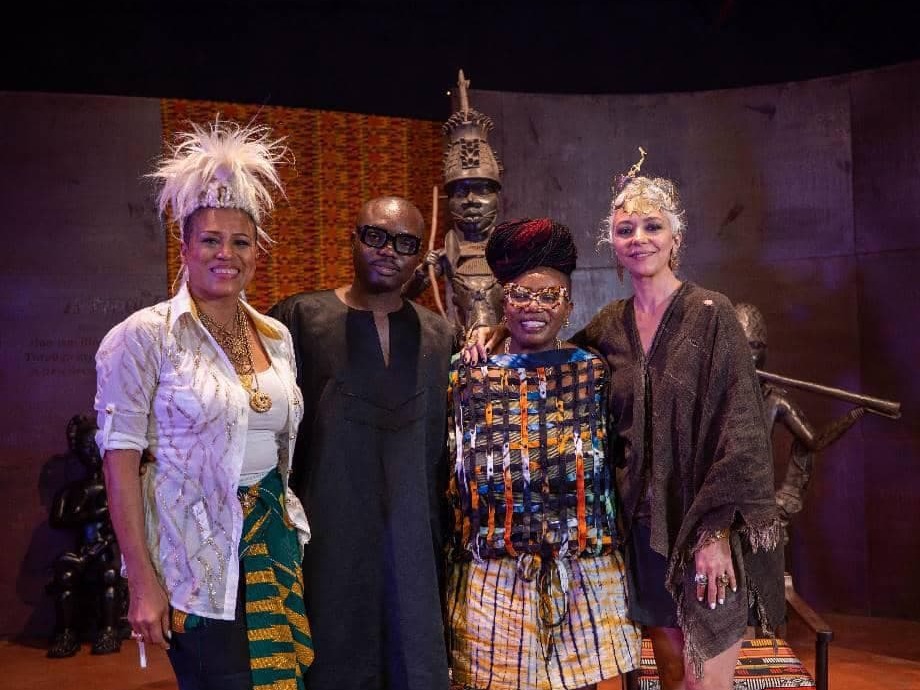
The Ghana International Fashion Team (GiFT) is an informal group of rotating Ghanaian creative professionals initiated by Beatrice Bee Arthur. She is a Russo-Ghanaian with no formal training in dressing-making nor fashion designing. After obtaining a BA in Sociology, Linguistics and Spanish Philology in 1999 at the University of Ghana, her keen interest in exploring Akan symbolism and African handwoven textiles turned her to designing a clothing line: B’ExotiQ by Bee Arthur in 2000. In 2001, her cosmopolitan collection won her the title of KORA All Africa Fashion Award Winner in Sun City, SA.
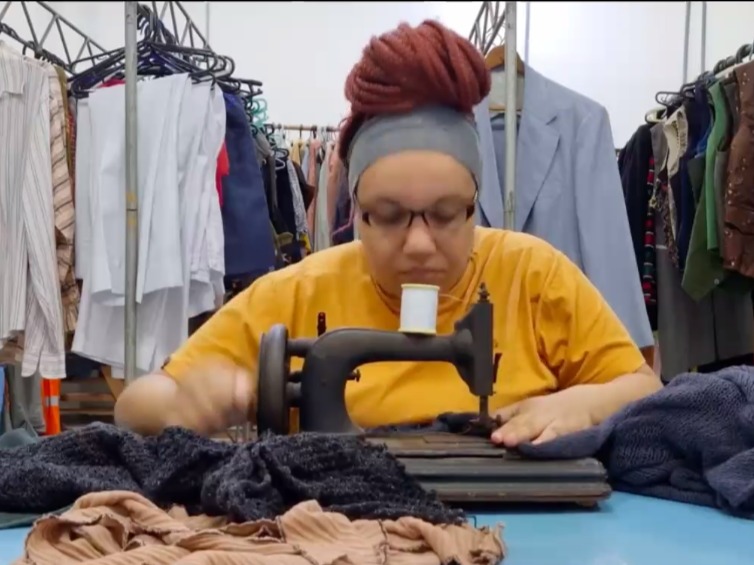
Moda e Decolonialidade: Encruzilhadas do Sul Global (Fashion and Decoloniality: Global South Crossroads Collective) is composed of interdisciplinary researchers from Brazilian and North American universities, whose purpose is to draw reflections on post-colonial and decolonial scholarship, pursuing critical and analytical ways that fashion has traditionally been approached in Brazil. Because the conceptual framework used to analyse Brazilian fashion is based usually on the Eurocentric epistemic theory, concepts, issues and methodologies. The Collective is associated to Human Rights, Culture and Identity working group at the Federal Institute of Education, Science and Technology of Rio de Janeiro (IFRJ), supported by the National Council for Scientific and Techonological Development CNPQ.
GFA24 Hosting Coalitions
WITCHES OF THE EAST (Turkey)
We are a non-profit, ecofeminist design collective consisting of six Turkish women, who aim to repair the relationship between humans and nature through ethical, symbiotic, circular, and slow ways of thinking and designing. We are upcyclers, biodesigners, farmers, ethical foragers, and eco-printers whose instruments are textiles, clothing, spaces, and living organisms. We act as an agent and catalyst for interconnected, just, symbiotic, solidaristic, collaborative, slow, embracing, and circular ways of surviving, communicating, and co-creating. With an intention to repair, care, heal, and reform the colonial, patriarchal and unjust fashion system, we produce multidisciplinary works of fashion, material, methods, and knowledge.
NEOFASHFARRIGHT (Austria)
The project “NeoFashFarRight” is an in-depth fashion studies research investigating the current role of fashion for the far right in Europe and the USA. Since the millennium, on both sides of the Atlantic, an international far right has appropriated the “language of fashion” (Barthes) for its strategic purposes. In the course of this, according to our diagnosis of the times, fashion has been weaponized. Fashion plays an essential role in forming and expanding national, transnational, and transatlantic networks of the far right. Contemporary far-right fashion aesthetics are characterized by polysemy and opaqueness, termed here, a “new complexity in style”.

COBBLED GOODS (Canada)
Cobbled Goods curates unique kicks made with respect for makers and nature. We call it uncommon footwear, for the common good. In our catalog you’ll find shoes made with everything from upcycled beach chairs to old car tires, and centuries-old traditional techniques. Many brands are going full circle by offering recycling programmes and resoling services for worn out pairs. Powered by a collective of indie footwear companies, we want to demonstrate a “for the people” alternative to big businesses.

MENDIT RESEARCH LAB (Russia)
Mendit Research Lab founded by Liudmila Aliabieva in Moscow in August 2021 is an independent practice-led female research collective that brings together 9 participants who are close in research and creative spirit united by their interest in clothing cultures, sustainable practices, textile activism and co-creative strategies. The Lab operates in a variety of formats ranging from traditional academic forms such as seminars and discussion groups to practice-based workshops working both within and outside academia. We look at repair as an act of care and attachment, as form of resistance and problem-solving, as a therapeutical and creative gesture, as form of sharing and coping with crisis.
Mendit Research Lab activities and initiatives have demonstrated the potential of mending as art and design strategy, sustainable practice, pedagogical and community building tool and a form of activism, silent protest and resistance.

FASHION ACT NOW (United Kingdom)
Fashion Act Now was founded in 2020, an outgrowth of Extinction Rebellion’s ‘Fashion Action’, the group behind XR’s ‘Cancel Fashion Week’ and ‘Boycott Fashion’ campaigns. Fashion Act Now has since defined a separate profile with a distinctive approach to the problem of industrial Fashion.
A dedicated group of activists, from all walks of life, Fashion Act Now stands not just in opposition to extractivist, growth-based industrial Fashion but especially for the alternatives to the industry: clothing cultures that nurture people and planet.
FAN spent its initial years carefully conceptualising its foundations and framework. This work resulted in a uniquely configured space within fashion activism. With the funding procured in late 2023, FAN is now building OurCommon.Market, a unique initiative devoted to stimulating, encouraging and linking commons/communities that produce clothing for people, not profit. These include communities that have been ignored, undermined and erased by the dominant industrial Fashion system, and informal communities built by all who work with fibre, loom, needle and knots to make, repair, design and create alternative dress.

 GLOBAL FASHIONING ASSEMBLY